Introduction
After choosing the Polyglots team for my WP Credits project, I finally had the opportunity to begin working on my first WordPress translations.
My contribution project focuses on translating the Elementor plugin from English into Spanish. Although I had already explored WordPress through the development of my personal website, contributing to an open-source project was a different experience.
This time, I was not just learning how to use WordPress. I was participating in the process of making its tools more accessible to other users.
Exploring the Polyglots Handbook
One of the first steps in my contribution journey was learning about the Polyglots team and its translation workflow.
The Polyglots Handbook explains how contributors can participate in translating WordPress, plugins, and themes into different languages. It also introduces the importance of translation guidelines, consistency, and community review.
One thing I found particularly interesting was that submitting a translation does not automatically mean it will be accepted. Translation editors review suggestions to ensure they are accurate and consistent with the language used throughout WordPress.
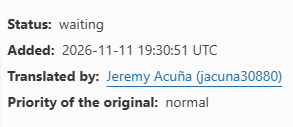
This helped me understand that translation is not just about replacing English words with Spanish equivalents. It also requires attention to context, technical terminology, and the experience of the people who will eventually use the software.
My First Translation Contributions
For my first contributions, I started translating strings from the Elementor plugin using the official WordPress translation platform.
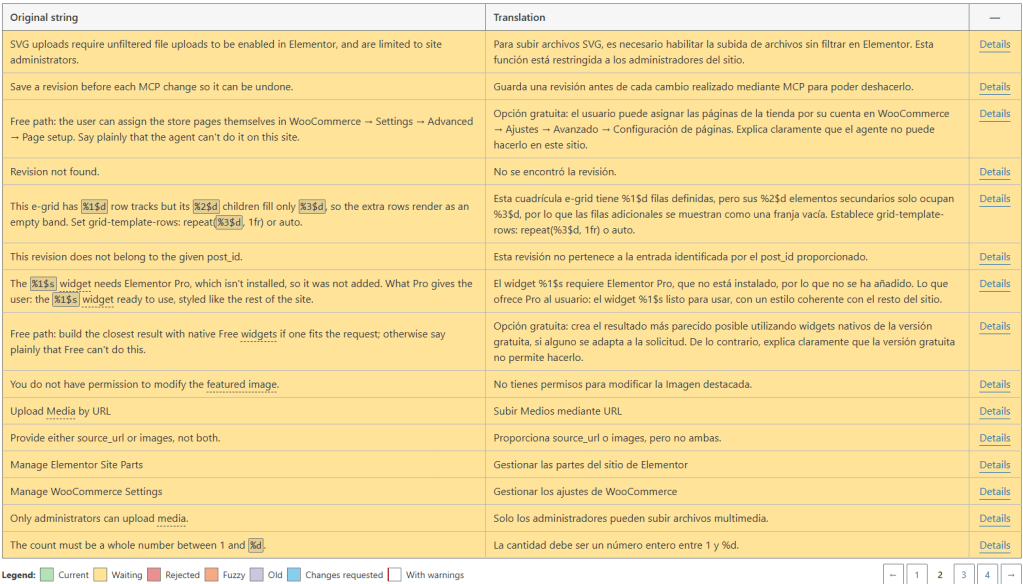
Some of the first strings I worked on were relatively simple, such as “Add,” “Carousel,” “View Page,” and “Icon Color.”
For example:
- Add → Añadir
- Carousel → Carrusel
- View Page → Ver página
- Icon Color → Color del icono
- Revision restored. → Revisión restaurada.
As I continued, I encountered more complex strings containing technical instructions, error messages, and placeholders such as %s, %d, and %1$s.
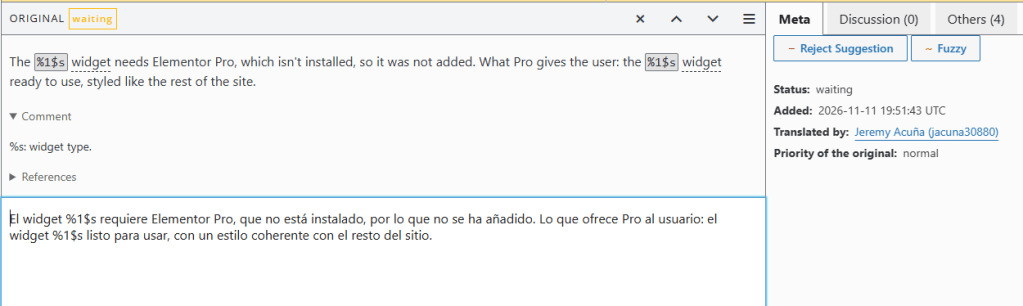
These required additional attention because certain elements must remain unchanged for the plugin to function correctly.
I submitted my translation suggestions through the WordPress translation platform, where they can be reviewed by the translation community.
My overall goal is to contribute 300 translated strings during this project.
Challenges and What I Learned
One of my first challenges was understanding the context of certain English expressions.
Some words can have several translations depending on where they appear in the software. For example, terms related to layouts, settings, and interface components need to remain consistent with the terminology commonly used in WordPress.
Another challenge was working with technical strings containing programming-related elements, including CSS properties and placeholders.
As a Computer Systems Engineering student, I am familiar with many technical concepts, but translating them into clear and natural Spanish requires a different kind of attention.
This experience has helped me improve my technical vocabulary, practice English comprehension, and become more careful when working with software interfaces.
My First Impressions of the Polyglots Community
My first impression of the Polyglots contribution process is that it is structured and collaborative.
Contributors can suggest translations, while experienced translation editors review them before they become part of the translated software.
I appreciate this approach because it encourages consistency and quality, especially when many people are working on the same project.
I have also realized that contributing to open-source software involves more than completing individual tasks. It means following shared guidelines and understanding how individual contributions fit into a larger community effort.
Although I am still at the beginning of my journey, I am interested in learning more about the review process and improving my translations through feedback.
Next Steps and Final Reflection
My next goal is to continue translating Elementor strings and make progress toward completing 300 translation suggestions.
I also want to become more familiar with the Polyglots translation guidelines, review my work carefully, and learn from any feedback I receive.
This first contribution experience has shown me that participating in open-source projects does not always require writing code. Translating software is also a meaningful way to contribute, especially when it helps people access technology in their own language.
I am motivated to continue working on this project and developing skills that will be valuable for my professional future.
For me, this is an important first step toward becoming a more active member of the WordPress community.


Leave a Reply